
Hi, I’m Kim — the knitter and designer behind M1R KNIT. I teach the Norwegian knitting method through clear tutorials, modern patterns, and simple techniques designed to help you knit with more confidence and comfort.
Have you always wanted to learn how to knit socks but weren't quite sure where to begin? Or perhaps you've already knit a pair of socks and are ready to try a traditional heel flap and gusset construction?
My newest Sock 01 knitting tutorial is here, and I'm walking you through how to knit a classic heel flap and gusset sock from start to finish using the Magic Loop method and Norwegian knitting technique!
Sock knitting can seem a little intimidating at first, especially when you get to the heel. But once you understand how the different parts of a sock come together, it's such a rewarding project. And there's nothing quite like wearing a pair of socks you've knit yourself!
🧦 WATCH THE FREE SOCK KNITTING TUTORIAL 👇
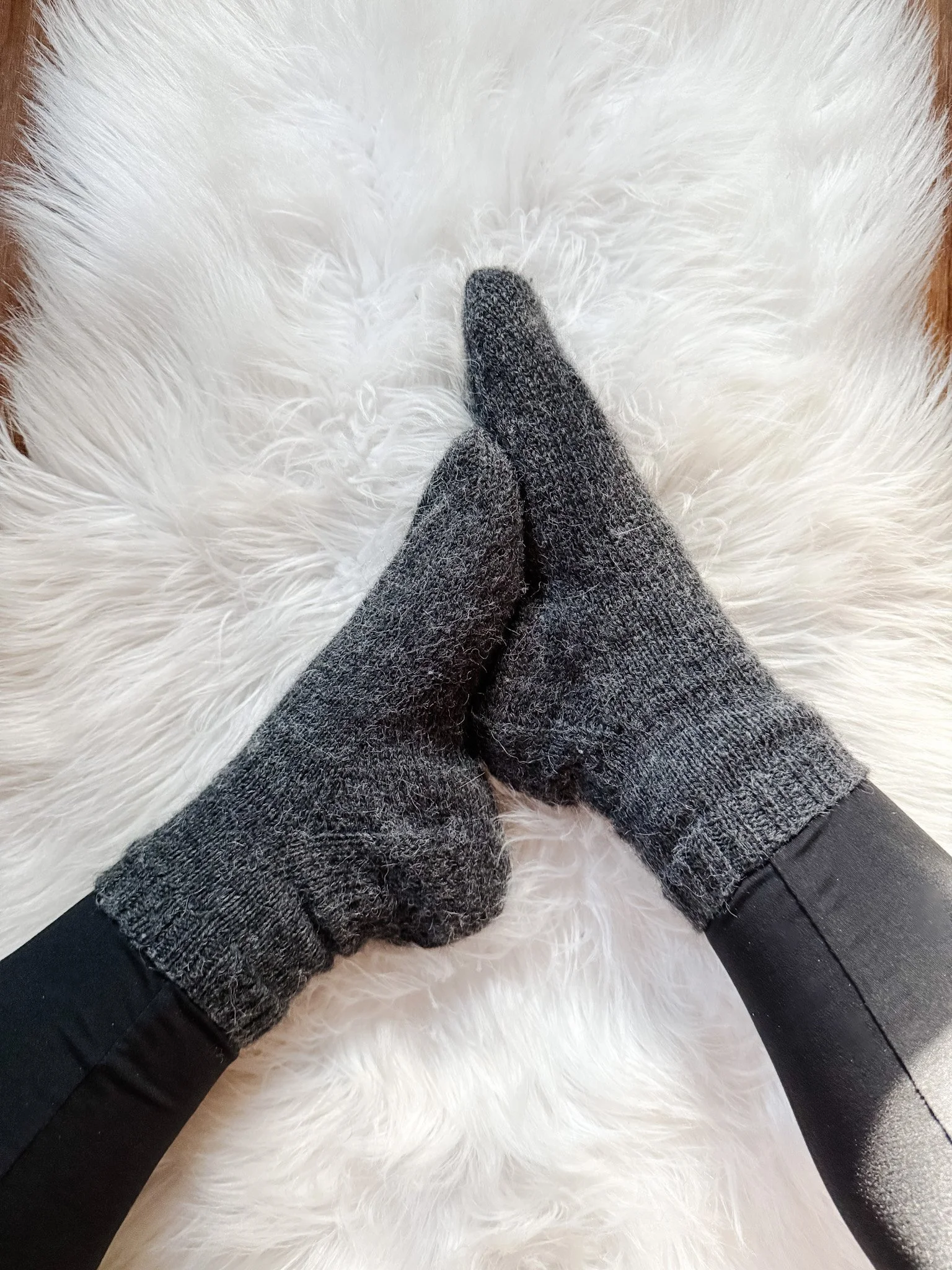
WATCH THE TUTORIAL HERE: https://m1rknit.com/tutorials/heel-flap-and-gusset-sock-tutorial
The SOCKS 01 Knitting Pattern is an intermediate pattern for knitting a classic pair of cuff-down shortie socks featuring 2 x 2 ribbing, a slip-stitch heel flap, traditional heel turn, gusset shaping and a grafted toe.
Worked in fingering-weight yarn, SOCKS 01 has a clean, simple look designed for everyday wear. The short leg and classic stockinette construction make this a versatile sock pattern while still introducing knitters to traditional heel-flap-and-gusset sock construction.
The downloadable PDF includes clear written instructions, sizing and finished measurements, yarn requirements, gauge information, a size chart, pattern abbreviations and technique guidance to help you complete your project.
ABOUT THE PATTERN
SOCKS 01 is worked from the cuff down and in the round using the magic loop method.
The sock begins with a 2 x 2 ribbed cuff followed by a short stockinette leg. A slip-stitch heel flap is worked flat, followed by a traditional heel turn and picked-up gusset stitches. The foot is worked in stockinette stitch before shaping the toe and grafting the remaining stitches using Kitchener stitch.
Pattern Type: Socks
Skill Level: Intermediate
Construction: Cuff-down, heel flap and gusset, worked in the round using magic loop
Yarn Weight: Fingering
Sizes: Adult S (M, L)
SKILL LEVEL
INTERMEDIATE
This pattern is suitable for knitters comfortable with:
Working in the round using magic loop
2 x 2 ribbing
Working stockinette stitch
Working a slip-stitch heel flap
Turning a heel
Picking up stitches
Working gusset decreases
Kitchener stitch
SIZES + FINISHED MEASUREMENTS
Sizes Included:
Adult S (M, L)
Designed to Fit Foot Circumference:
S: approximately 7" / 18 cm
M: approximately 8" / 20.5 cm
L: approximately 9" / 23 cm
Finished Sock Circumference:
S: approximately 6¼" / 16 cm
M: approximately 7⅛" / 18 cm
L: approximately 8" / 20.5 cm
Cuff Ribbing:
0.75" / 2 cm
Stockinette Leg:
2" / 5 cm
Recommended Ease:
Approximately 10–11% negative ease around the foot.
YARN + GAUGE
Suggested Yarn:
Filcolana Arwetta
Yarn Weight:
Fingering weight
Yarn Requirements:
S: 2 skeins
M: 2 skeins
L: 2 skeins
Filcolana Arwetta contains approximately 210 m per 50 g skein
Alternative Yarn:
DROPS Fabel or another fingering-weight sock yarn that achieves the required gauge.
Gauge:
36 stitches × 44 rounds = 4" / 10 cm in stockinette stitch, worked in the round and unblocked.
Suggested Needles:
2.25 mm (US 1) circular needle with a 32" / 81 cm cable for magic loop, or size required to obtain gauge.
Notions:
Yarn needle
Scissors
Full yarn, needle, gauge and notion information is included in the PDF pattern.
CONSTRUCTION + TECHNIQUES
This pattern includes the following techniques:
Long-tail cast-on
Working in the round using magic loop
2 x 2 ribbing
Stockinette stitch
Slip-stitch heel flap
Traditional heel turn
Picking up heel-flap stitches
Gusset shaping and decreases
Toe decreases
Kitchener stitch
NORWEGIAN KNITTING TUTORIALS
M1R KNIT specializes in teaching the Norwegian knitting method, a continental-style knitting technique with the working yarn held in the left hand.
You do not need to use the Norwegian knitting method to make this pattern unless specifically stated.
Where helpful, the pattern includes links to M1R KNIT video tutorials demonstrating knitting techniques using the Norwegian knitting method.
WHAT'S INCLUDED
✔ Complete downloadable PDF knitting pattern
✔ Step-by-step written instructions
✔ Adult S, M and L sizing
✔ Finished measurements
✔ Size chart
✔ Yarn requirements
✔ Needle and notion information
✔ Gauge information
✔ Pattern abbreviations and technique notes
✔ Kitchener stitch instructions
✔ Links to helpful M1R KNIT tutorials where applicable
✔ Original M1R KNIT design
DIGITAL DOWNLOAD
This listing is for a DIGITAL PDF KNITTING PATTERN ONLY.
No physical product or finished knitted item will be shipped.
Your pattern will be available for digital download after purchase.
USAGE + COPYRIGHT
For personal, non-commercial use only.
Items made from this pattern may not be sold.
Pattern may not be shared, copied or redistributed.
© M1R KNIT. All Rights Reserved.
PATTERN SUPPORT
Questions while knitting? I’m happy to help.
Find more knitting patterns, tutorials and technique guides from M1R KNIT:
Website: M1RKNIT.com
YouTube: @m1rknit
Instagram: @m1rknit
Ravelry: M1R KNIT
SHARE YOUR PROJECT
I’d love to see what you make.
Tag @m1rknit when sharing your finished M1R KNIT project.
Learn How to Knit Socks from Start to Finish
In this detailed sock knitting tutorial, we'll work through the entire construction of a traditional cuff-down sock together.
I'll show you how to cast on using the long-tail cast-on, join your stitches in the round using Magic Loop, knit the cuff and leg, and construct a reinforced heel flap. (Note: you can also use the Old Norwegian CO— also known as the Twisted German CO).
From there, we'll tackle the heel turn, pick up and knit stitches for the gusset, work the gusset decreases, knit the foot, and finish with a wedge toe and Kitchener stitch.
In this tutorial, you'll learn:
How to knit socks using the Magic Loop method
How to knit a 2x2 ribbed cuff and stockinette leg
How to knit a reinforced slip-stitch heel flap
How to turn a heel using short rows and decreases
How to pick up and knit gusset stitches
How to prevent unwanted holes and gaps in your knitting
How to work gusset decreases for a comfortable sock fit
How to determine the correct foot length
How to knit a wedge toe and close it with Kitchener stitch
I'm also sharing plenty of little tips and tricks I've learned over my years of knitting socks, including some solutions to common problems that aren't always covered in knitting tutorials.
The Heel Flap & Gusset: A Classic Sock Construction
One of my favourite things about a traditional heel flap and gusset sock is the way it fits around the heel and instep.
Unlike some other sock constructions, the heel flap and gusset create additional room around the heel and instep, making this an especially useful technique to learn if you're interested in customizing the fit of your handmade socks.
In this pattern, we'll knit a reinforced slip-stitch heel flap. Alternating slipped and knit stitches creates a textured, durable fabric that's particularly well suited to an area of the sock that experiences plenty of wear.
We'll then turn the heel to create its shape before picking up stitches along each side of the heel flap to form the gusset.
If you've never turned a heel before, don't worry! I'll demonstrate the process step by step in the video so you can see exactly where to place your decreases and how the heel takes shape.
Sock Knitting Tips: Preventing Holes & Loose Stitches
If you've knit a heel flap and gusset sock before, you may have noticed that one edge of your heel flap looks a little looser than the other. Or perhaps you've struggled with small holes where the gusset meets the instep.
These are common sock knitting frustrations, and they're something I address throughout this tutorial.
I'll show you a few techniques I use to improve the appearance of my heel flap edges, maintain consistent tension, and help prevent unwanted gaps when picking up gusset stitches.
I'll also demonstrate why I prefer twisting my picked-up gusset stitches on the first round and explain how I position my gusset decreases.
Little details like these can make a difference in the finished appearance of your socks!
The Sock 01 Knitting Pattern: Your Companion to the Tutorial
WATCH THE TUTORIAL HERE: https://m1rknit.com/tutorials/heel-flap-and-gusset-sock-tutorial
The SOCKS 01 Knitting Pattern is an intermediate pattern for knitting a classic pair of cuff-down shortie socks featuring 2 x 2 ribbing, a slip-stitch heel flap, traditional heel turn, gusset shaping and a grafted toe.
Worked in fingering-weight yarn, SOCKS 01 has a clean, simple look designed for everyday wear. The short leg and classic stockinette construction make this a versatile sock pattern while still introducing knitters to traditional heel-flap-and-gusset sock construction.
The downloadable PDF includes clear written instructions, sizing and finished measurements, yarn requirements, gauge information, a size chart, pattern abbreviations and technique guidance to help you complete your project.
ABOUT THE PATTERN
SOCKS 01 is worked from the cuff down and in the round using the magic loop method.
The sock begins with a 2 x 2 ribbed cuff followed by a short stockinette leg. A slip-stitch heel flap is worked flat, followed by a traditional heel turn and picked-up gusset stitches. The foot is worked in stockinette stitch before shaping the toe and grafting the remaining stitches using Kitchener stitch.
Pattern Type: Socks
Skill Level: Intermediate
Construction: Cuff-down, heel flap and gusset, worked in the round using magic loop
Yarn Weight: Fingering
Sizes: Adult S (M, L)
SKILL LEVEL
INTERMEDIATE
This pattern is suitable for knitters comfortable with:
Working in the round using magic loop
2 x 2 ribbing
Working stockinette stitch
Working a slip-stitch heel flap
Turning a heel
Picking up stitches
Working gusset decreases
Kitchener stitch
SIZES + FINISHED MEASUREMENTS
Sizes Included:
Adult S (M, L)
Designed to Fit Foot Circumference:
S: approximately 7" / 18 cm
M: approximately 8" / 20.5 cm
L: approximately 9" / 23 cm
Finished Sock Circumference:
S: approximately 6¼" / 16 cm
M: approximately 7⅛" / 18 cm
L: approximately 8" / 20.5 cm
Cuff Ribbing:
0.75" / 2 cm
Stockinette Leg:
2" / 5 cm
Recommended Ease:
Approximately 10–11% negative ease around the foot.
YARN + GAUGE
Suggested Yarn:
Filcolana Arwetta
Yarn Weight:
Fingering weight
Yarn Requirements:
S: 2 skeins
M: 2 skeins
L: 2 skeins
Filcolana Arwetta contains approximately 210 m per 50 g skein
Alternative Yarn:
DROPS Fabel or another fingering-weight sock yarn that achieves the required gauge.
Gauge:
36 stitches × 44 rounds = 4" / 10 cm in stockinette stitch, worked in the round and unblocked.
Suggested Needles:
2.25 mm (US 1) circular needle with a 32" / 81 cm cable for magic loop, or size required to obtain gauge.
Notions:
Yarn needle
Scissors
Full yarn, needle, gauge and notion information is included in the PDF pattern.
CONSTRUCTION + TECHNIQUES
This pattern includes the following techniques:
Long-tail cast-on
Working in the round using magic loop
2 x 2 ribbing
Stockinette stitch
Slip-stitch heel flap
Traditional heel turn
Picking up heel-flap stitches
Gusset shaping and decreases
Toe decreases
Kitchener stitch
NORWEGIAN KNITTING TUTORIALS
M1R KNIT specializes in teaching the Norwegian knitting method, a continental-style knitting technique with the working yarn held in the left hand.
You do not need to use the Norwegian knitting method to make this pattern unless specifically stated.
Where helpful, the pattern includes links to M1R KNIT video tutorials demonstrating knitting techniques using the Norwegian knitting method.
WHAT'S INCLUDED
✔ Complete downloadable PDF knitting pattern
✔ Step-by-step written instructions
✔ Adult S, M and L sizing
✔ Finished measurements
✔ Size chart
✔ Yarn requirements
✔ Needle and notion information
✔ Gauge information
✔ Pattern abbreviations and technique notes
✔ Kitchener stitch instructions
✔ Links to helpful M1R KNIT tutorials where applicable
✔ Original M1R KNIT design
DIGITAL DOWNLOAD
This listing is for a DIGITAL PDF KNITTING PATTERN ONLY.
No physical product or finished knitted item will be shipped.
Your pattern will be available for digital download after purchase.
USAGE + COPYRIGHT
For personal, non-commercial use only.
Items made from this pattern may not be sold.
Pattern may not be shared, copied or redistributed.
© M1R KNIT. All Rights Reserved.
PATTERN SUPPORT
Questions while knitting? I’m happy to help.
Find more knitting patterns, tutorials and technique guides from M1R KNIT:
Website: M1RKNIT.com
YouTube: @m1rknit
Instagram: @m1rknit
Ravelry: M1R KNIT
SHARE YOUR PROJECT
I’d love to see what you make.
Tag @m1rknit when sharing your finished M1R KNIT project.
While the video demonstrates each step of the sock knitting process, I highly recommend knitting along with my Sock 01 written knitting pattern.
The pattern is designed to work alongside the video, giving you the written instructions and measurements you'll need as you knit.
Inside the pattern, you'll find the stitch counts, sizing information, gauge requirements, and instructions for each part of your sock.
You'll also learn how to measure your feet and determine the correct sock size and foot length so you're not simply knitting a sock based on someone else's measurements.
One of the wonderful things about knitting your own socks is being able to customize the fit!
The video shows you HOW to knit the sock, while the written pattern gives you the instructions and measurements to follow at your own pace.
Having both available makes it much easier to pause the tutorial, check your stitch counts, and pick up exactly where you left off.
🧦 PURCHASE THE SOCK 01 KNITTING PATTERN
What Yarn & Needles Do You Need?
For this sock knitting tutorial, I'm using fingering-weight sock yarn and the Magic Loop knitting method.
I particularly love DROPS Nord and Filcolana Arwetta for knitting socks. Both are lovely fingering-weight yarn options, although they have slightly different characteristics.
The tutorial demonstrates knitting with 2.25 mm (US 1) circular needles, but remember that obtaining the correct gauge is more important than using the exact same needle size as me.
For Sock 01, we're aiming for a stitch gauge of 36 stitches over 4" / 10 cm, or 9 stitches per inch.
Socks need a fairly firm fabric to help them maintain their shape and withstand regular wear, so don't skip checking your gauge!
You'll find more information about materials, sizing, and gauge in the written pattern.
Can Beginners Knit Heel Flap & Gusset Socks?
Absolutely! But, I recommend starting your sock journey with the SOCK 02 pattern with the Forethought Heel
If you already know how to cast on, knit, purl, and work basic decreases, you're well on your way to knitting your first pair of socks.
The heel flap and gusset construction has a few more steps than some other sock heels, but that doesn't mean it's beyond a beginner's abilities.
My biggest recommendation is to take your time, follow the written pattern, and watch each section of the video as you work through it.
And remember, you can always pause, rewind, and watch a particular technique as many times as you need!
If you're completely new to sock knitting and would prefer to begin with a different heel construction, you might enjoy my Forethought Heel Socks for Beginners tutorial first.
Watch here: https://m1rknit.com/tutorials/forethought-heel-socks-for-beginners
Ready to Knit Your First Heel Flap & Gusset Socks?
There's something so satisfying about finishing a pair of hand-knit socks, especially when you've learned a new technique along the way.
I hope this tutorial helps take some of the mystery out of traditional sock construction and gives you the confidence to tackle your own heel flap and gusset socks.
Grab your yarn, download the Sock 01 knitting pattern, and come knit along with me!
🧶 GET THE SOCK 01 KNITTING PATTERN: https://m1rknit.com/patterns/p/socks-01-knitting-pattern-pdf-cuff-down-sock-pattern-m1r-knit
Happy Knitting,
XO Kim
Enjoying the tutorials? You can support the channel by buying me a coffee ☕Yarn I love: https://lionbrand.sjv.io/B5doOB
My fave knitting needles + notions